Monday, 23 June 2008

Maligning Alignment

"Ah ha", says you, "what a funny title! What clever wordplay! How Shackleton's wit doth sparkle!"

...

(I'll just get on with it, shall I?)

The Status Quo

The classic alignment system is D&Ds two axis, nine alignments. The Lawful - Chaotic axis describes a characters attitude to what might be deemed civil society. The Good - Evil axis describes their.. well.. evilness. Thus, every character is described in two words, e.g. "Lawful Good" or "Chaotic Neutral".

It's simple and, generally, it's effective. There are a few quirks... Neutral ends up being a bit of a catch all and breeds some strange alliances. And it's a bit limited in its application. All in all, though, it's a robust system, despite its critics.

And yet, in a glorious act of self immolation, Wizards of the Coast managed to take the two axis system and make it worse. Abolishing the Lawful - Chaotic axis, D&D 4th edition now takes a single axis with ranges from Chaotic Evil (i.e. really evil), through Evil, Neutral, Good and Lawful Good (helping old ladies across the road).


This caused me some consternation. If I ever get around to a 4th Edition game, it's certainly going to be house-ruled.

All About Motivations


So here's how I tackled alignments in Elements Eight. Is it better? Not necessarily, to be honest, and there are still some question marks over specific aspects. But it does have some nice mechanics.

In Elements Eight, each character has a set of Motivations. These Motivations are things like:

  • Survival
  • Wealth
  • Power
  • Justice
  • Chaos (which can be interpreted as "fun")
  • Nation (loyalty to a specific nation, e.g. "Tirigoth")
  • Race (loyalty to the character's race, e.g. "Elves")
  • Religion (loyalty to a specific religion, e.g. "Elsivere")
  • Bloodlust (roar! attack! kill!)
  • Tribe (which can be friends as well as an actual tribe)
  • Law
and possibly one or two that I've missed.

At any given moment, one of these Motivations will be to the fore, and is called the Acting Motivation. The Acting Motivation gives a solid guideline to both GMs and players as to how the character should behave. No more wishy-washy convoluted discussions as to the exact meaning of "Chaotic". I've tried my best to make the Motivations intuitive, to make them appeal to common sense.

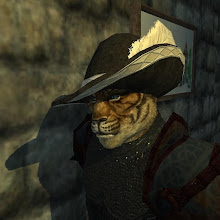
Take Shackleton, for example, our feline pilferer of coins and wearer of fancy hats. Shackleton is motivated by Wealth, certainly. But he is also pretty loyal. So he takes Tribe too. And, when the chips are down, Shackleton isn't such a bad fellow. He takes Justice as a third Motivation. How he acts on the day depends on which of these Motivations comes to the fore.

From Three to Six

How many Motivations should characters have? This is a question I haven't yet entirely decided. Six would be ideal from a mechanical point of view since it would allow more flexibility and nuance. However, having to wrestle with six Motivations for each character is a bit unwieldy. So I'm leaning towards three; or possibly allowing players to just choose the number of motivations on a character by character basis.

There is also a query surrounding how the Acting Motivation is chosen. Either it can be randomised (with a suitably weighted roll). But perhaps it would be better to allow players to simply choose which was their Acting Motivation. Letting players choose would address some concerns I have about rules eclipsing roleplay, and would have the additional benefit of a tactical element (see later).

There's also the possibility of using Motivations to randomise NPC personalities. For example, you might give all city guards the following Motivations: Law, Law, Wealth, Power, Justice, Nation. Then anytime the players encounter a city guard, roll 1d6 to see which is the Acting Motivation for that guard. Lo and behold, you know whether the guard is honest, corrupt, bullying or patriotic.

Thoughts and suggestions on these points would be very helpful!

Diplomatic Armour

Elements Eight has a fairly comprehensive set of diplomatic skills. Briefly, the idea is to provide a solid foundation for roleplaying, but the players should be careful to not let the skill checks replace good roleplay.

Motivations play a significant role in interactions.

Firstly, they guide the player or GM, giving them a foundation upon which to build a characters choices and words.

Secondly, certain Motivations are more vulnerable to certain kinds of diplomatic "attacks". For example, a character motivated by Wealth is much easier to bribe than one motivated by Law; a character motivated by Justice is vulnerable to empathy and pleas for mercy; and so forth. In a way, Motivations are diplomatic armour. Hence the tactical consideration in which Motivation is the Acting Motivation.

Motivations and Spells

Charm spells have never been handled well in D&D and other games. Mostly because there's no framework for describing how a person acts. Indeed, charm spells become a one roll win in many games.

Not so for Elements Eight.

Instead of giving the caster puppet-master like control, Charm and other mind altering spells in Elements Eight tend to revolve around changing the motivations of a character. Imprisoned by the evil count's goons? Charm the jailor to use Justice as his Motivation, whereupon he will surely see that the right course of action is to set you free... but that doesn't necessarily mean he will slaughter all of his pals for you.

There are also lesser charm-like spells. There are fear-like spells which force characters to be motivated by Survival. There are druidic soothing spells that specifically tackle Bloodlust in animals. And there are possibilities for many other interesting spells.


Mind reading spells are similarly given same foundation to work with. Detecting what Motivation an NPC is acting with goes a long way to winning them over, since you know the best diplomatic skill (Bribery, Intimdation, Persuasion etc.) to use.

Finally, Motivation provide a fun mechanic to play with. A good example is the spell "Crusade". When cast, the caster chooses a Motivation (say, Power, for example). All NPCs acting from that Motivation will be feared.

To Sum Up

Motivations offer some nice mechanics for spells and interactions. They also do a fine job of describing many faceted characters. There are some question marks over how extensive the Motivations system should be, some concerns about whether it will slow down play, but I'm keen to keep working with this system because I think it has potential.

Character Progression

I wanted to start with something different, but since I read this rather good analysis of character progression (http://sob.apotheon.org/?p=435) it strikes me as a good time to wrestle with the beast.

Character progression is tough.

Fortunately, the author of the blog above has done an excellent job of describing why.

I'm satisfied with the solution I've used in Elements Eight. It's not a perfect solution, but it's not bad. Here's how I solved it.

Characters improve their attributes and skills as time goes by. These improvements are incremental, narrow and are not particularly powerful. A very highly developed character who pumped all of his improvements into one set of talents might have the equivelent of a +5 bonus (on a d20 roll). The attributes and skills are moving, but slowly, and the characters never "outlevel" dangers.

The main focus of character advancement comes from Gifts. Gifts are somewhat similar to Character Points from Star Wars RPG, 2nd Edition. An excellent game, by the way. Probably the best designed game I've ever played. Simple but effective. A couple of my solutions have been adapted from Star Wars RPG, so you'll probably hear about it again.

Anyway, so gifts. Gifts are awarded at the rate of a few points per adventure. They can be awarded at the end of an adventure, but can also be used as bonuses for particular encounters, rewards for a nice bit of roleplaying and so forth.

The Gifts are as follows: Destiny, Doom, Luck, Wonder, Fame and Wealth.

Gifts can generally be used in place of a skill. Each time a Gift is used, a point is expended. Gifts will generally be higher than your skill (unless you've used them a lot). So Gifts allow you to, once in a while, do something extraordinary.

The type of gift indicates what kind of skills the Gift can be used for. Destiny is used for defensive combat, to keep you alive. Doom is used for offensive combat, to slay enemies. Luck is used for most non-combat. Jumping a chasm, picking a lock. But also avoiding death through circumstances; a cave in for example. Fame can be used in place of diplomacy skills. Wonder can be used in place of magical skills. Wealth is a little different, but affects what you can purchase.

As an example, let's say Shackleton, our favourite feline rapscallion, is fleeing certain death at the hands of a rampaging lynch mob. Before him is a chasm. Too far to jump, realistically. His jump skill of 17, whle formidable, is very risky. But being a rogue, he's picked up a fair amount of luck, and is sitting pretty on 26 Luck. Shackleton opts to use his Luck for this crucial action. He succeeds, of course. But his Luck is now 25. Let's hope it never runs out.

Overall, the effect is of a character who, like a character in any good book or film, is not invincible, but through Destiny, Doom, Luck or some other aspect is capable of extraordinary actions at just the right moment in time.

There are a couple of neat side effects from this system.

Magic has always been tricky to handle in RPGs. You want your casters to be powerful, you want them to be able to cast awe-inspiring spells. But at the same time, if they can cast incredible spells at will then they become too powerful. In Elements Eight, casting is done via skills, and although casting skill does improve (and slightly more than other skills), more powerful spells remain difficult or even impossible to cast - unless you use the Wonder gift.

This creates a nice pattern for spell casting. Casters can cast powerful spells - more powerful than the ones conventionally allowed by RPGs - but with restrictions. Casters can create magical items - but they have limited resources. Furthermore, they can cast ordinary spells and (thanks to the way magic works) at crucial times boost them to make them more more powerful than they would normally be. Hybrids such as Paladins and Rangers usually get a raw deal when it comes to spell casting, being locked out of the more interesting spells by arbitrary restrictions on the spells they know. In Elements Eight, they can from time to time use Wonder to cast spells on a par with regular casters.

Wealth is a little different from the other Gifts. The object of Wealth is to take away some of the accounting that goes on with coin. The idea is that, although one deals with coin for smaller purchases, for larger or re-occuring expenses, Wealth comes into play. Unlike other gifts, Wealth can actually be purchased. But in general, it creates an approximation of a characters monetary resources which is easier to keep track of than having 54,217 gold coins and removing a coin every time they buy a loaf of bread.

Gifts are replenished by the GM. If Gifts were an arbitrary reward (such as experience points), it would be hard for the GM to judge an appropriate amount. But because they have direct relevance, it is easier for the GM to determine an appropriate reward. Keep the Gifts fairly steady, improve them over time, and grant them in such a way that benefits the character (e.g. give mostly Luck to a rogue, give mostly Wonder to a wizard). This may sound daunting, but trust me - it's easy and it really works! (as you will know if you've played Star Wars, 2nd Edition).

One more thing about Gifts. I always liked the Backgrounds table from Rolemaster. You rolled on a table and you could come up with backgrounds, such as a wealthy family, or a cursed family, and so forth. These would produce interesting twists on a character concept, aiding the process of coming up with a living, breathing person. Gifts have allowed me to create something similar with Elements Eight. An optional rule, of course, since it's not everyone's cup of tea to randomise a twist to their character's background. Indeed, some GMs might allow characters to choose from the table... Anyway, I'm rather fond of it. Here's a few of examples from the Elements Eight Backgrounds table:

- "Sweetheart" +1d6 Luck so long as the Sweetheart waits for you.
- "Orphan" If you ever find out who your family were, +2d6 Destiny.
- "Out For Revenge" +1d6 Doom until your revenge is acquired.
- "Rival" +1 Luck each time you get one over your Rival.

So that's Gifts. Hopefully you enjoyed the read. Next article will be on Alignments, something that has rarely been covered well, and which 4th edition D&D has made more relevant than ever.

A Better RPG

I've been tinkering with roleplaying games for years. Trying to make them better. Because, although there have been some great roleplaying games, they have all had flaws; aspects which I find unsatisfactory.

The usual solution is to use house rules. I use a house game instead.

In this blog, I will focus on a few of the rules of this game (which is titled Elements Eight). Since I'm not a commercial interest, my aim isn't really to sell the game (although I could use some playtesters). Rather, it's to illustrate some examples of how I think roleplaying games can be made better; a few techniques that I've come up with over the years that I would like to share.